
During the Wedding
An unplugged ceremony: seeing the faces of the people you love
Give your guests permission to put their phones away and be part of the moment.
Put away the phones. Be part of the moment.
Watch the tip · 1:12
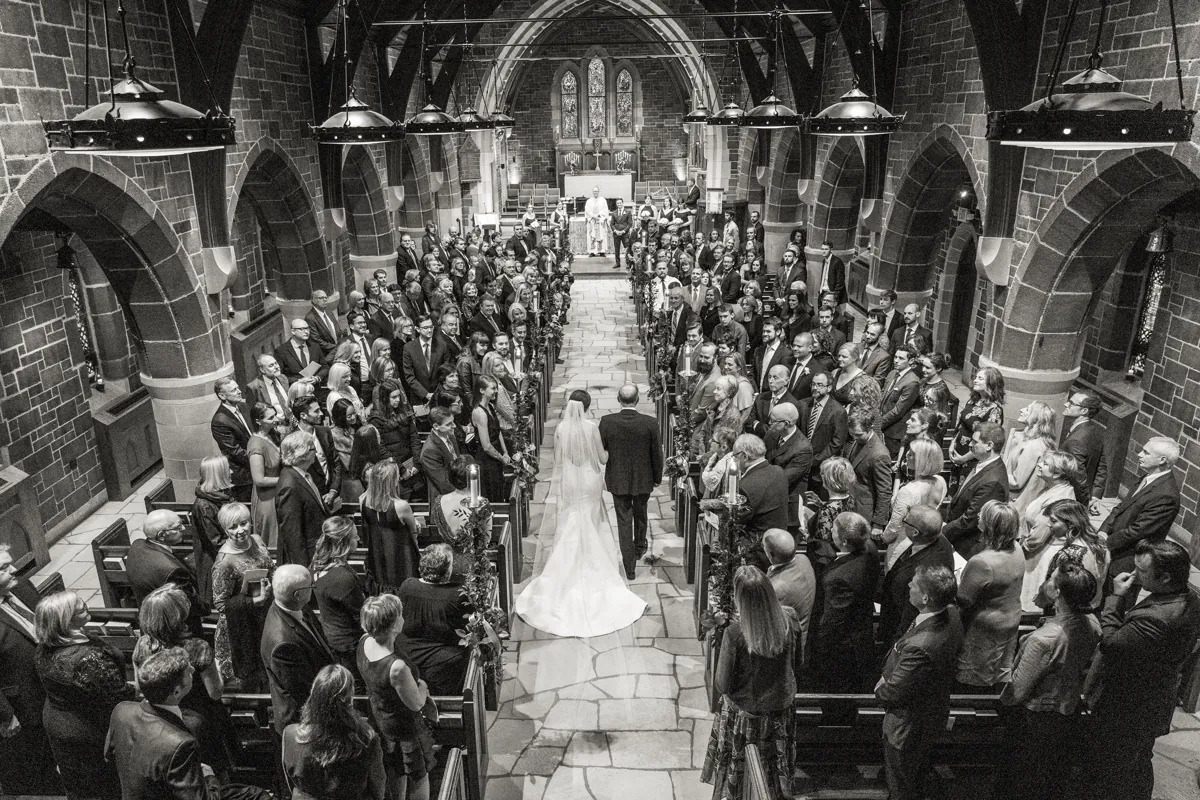
One of my favorite views at a wedding is the couple walking back down the aisle after the ceremony. Their faces tell one story. The faces of the people watching tell another.
A phone held in front of a guest's face can hide that reaction. Someone stepping into the aisle can also block a photograph that only happens once.
That is why I encourage couples to consider an unplugged ceremony: a ceremony during which guests put their phones and cameras away and leave the photographs to the people hired to make them.
Decide what you are actually asking
An unplugged ceremony does not have to mean a phone-free wedding. You might welcome guest photographs at the reception while asking for everyone's attention during the vows.
Decide the boundaries together. Does your request cover the processional, ceremony and walk back down the aisle? Would you also like guests to wait before sharing photographs online?
Those are separate requests. Keeping them clear makes them easier to communicate kindly.
Explain it before the ceremony begins
A short note on your wedding website or ceremony information can introduce the idea. A sign at the entrance can remind guests. Ask your officiant to make a brief announcement before the processional.
You could say: “We'd love to see your faces and share this moment with you. Please put away phones and cameras during the ceremony; our photographer will take care of the pictures.”
Keep the tone welcoming. You are inviting people to experience something with you, not scolding them for wanting a memory.
Speak personally to enthusiastic photographers
If a relative loves photographing family occasions, talk with them ahead of time. Thank them for their enthusiasm and explain why clear aisles and unobstructed views matter.
In the book, I describe moments when well-meaning guests moved in front of me or into the background of an important photograph. A quiet conversation before the day is much easier than trying to correct that while the ceremony is happening.
Your photographer should also coordinate with the officiant and venue about where they may stand and move. Everyone benefits from understanding the plan.
Keep sharing preferences separate
If privacy matters to you, say whether guests may post images and when. Discuss your wishes with your photographer as well. A guest-photo request does not automatically tell your professional team what you want shared publicly.
There may be personal reasons for exceptions, so handle those thoughtfully. The purpose is to make the ceremony feel more connected and comfortable.
Let the ceremony happen
Once the request has been made, let someone else manage the practical details. You shouldn't spend your vows checking whether everyone has put a phone away.
Look at each other. Hear the words. Let your friends and family respond. Those visible, unguarded reactions are part of the story you will want to remember.
From the book
The Secrets to Spectacular Wedding Photography
Adapted from my advice for couples on making the most of their wedding photographs—before, during and after the day.
Explore the book